Nov 2026 - When Technology Fails: 10 Incidents, 7 Patterns, One Lesson
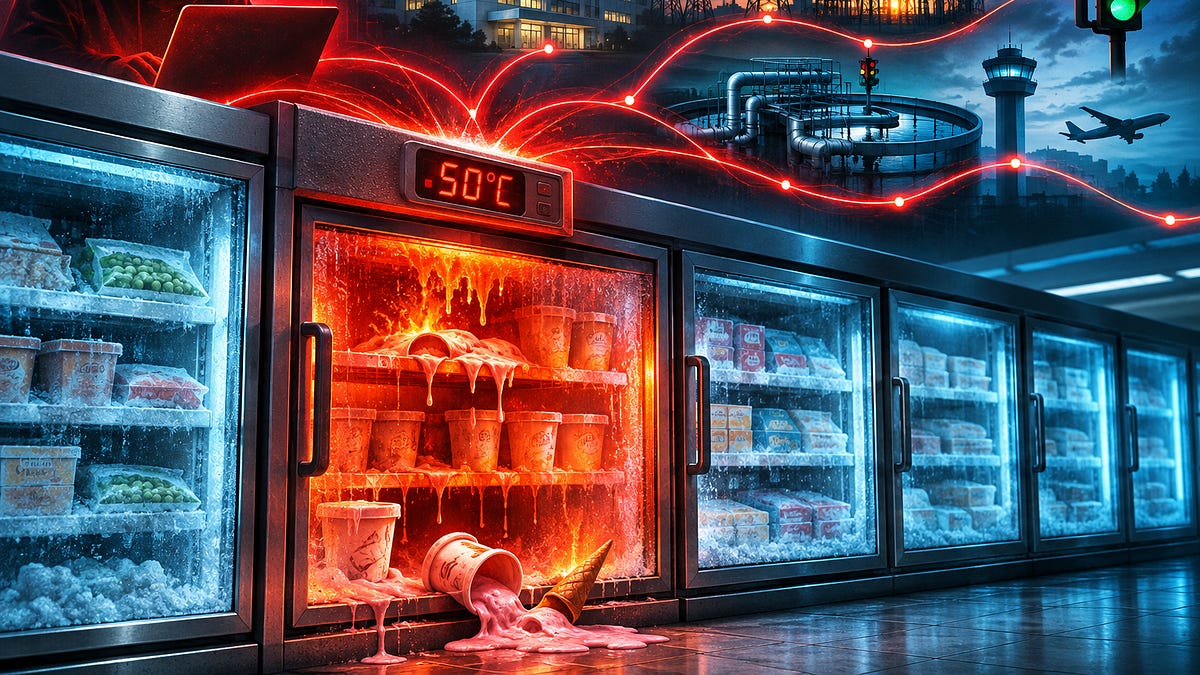
Over just a few weeks in October and November 2026, cyberattacks and technology failures disrupted supermarkets, airlines, financial institutions, and major digital platforms.
Although these incidents had different causes, they exposed a common weakness: our growing dependence on interconnected digital infrastructure.
What can organizations learn from these events, and how can they become more resilient?
 John Ruffolo
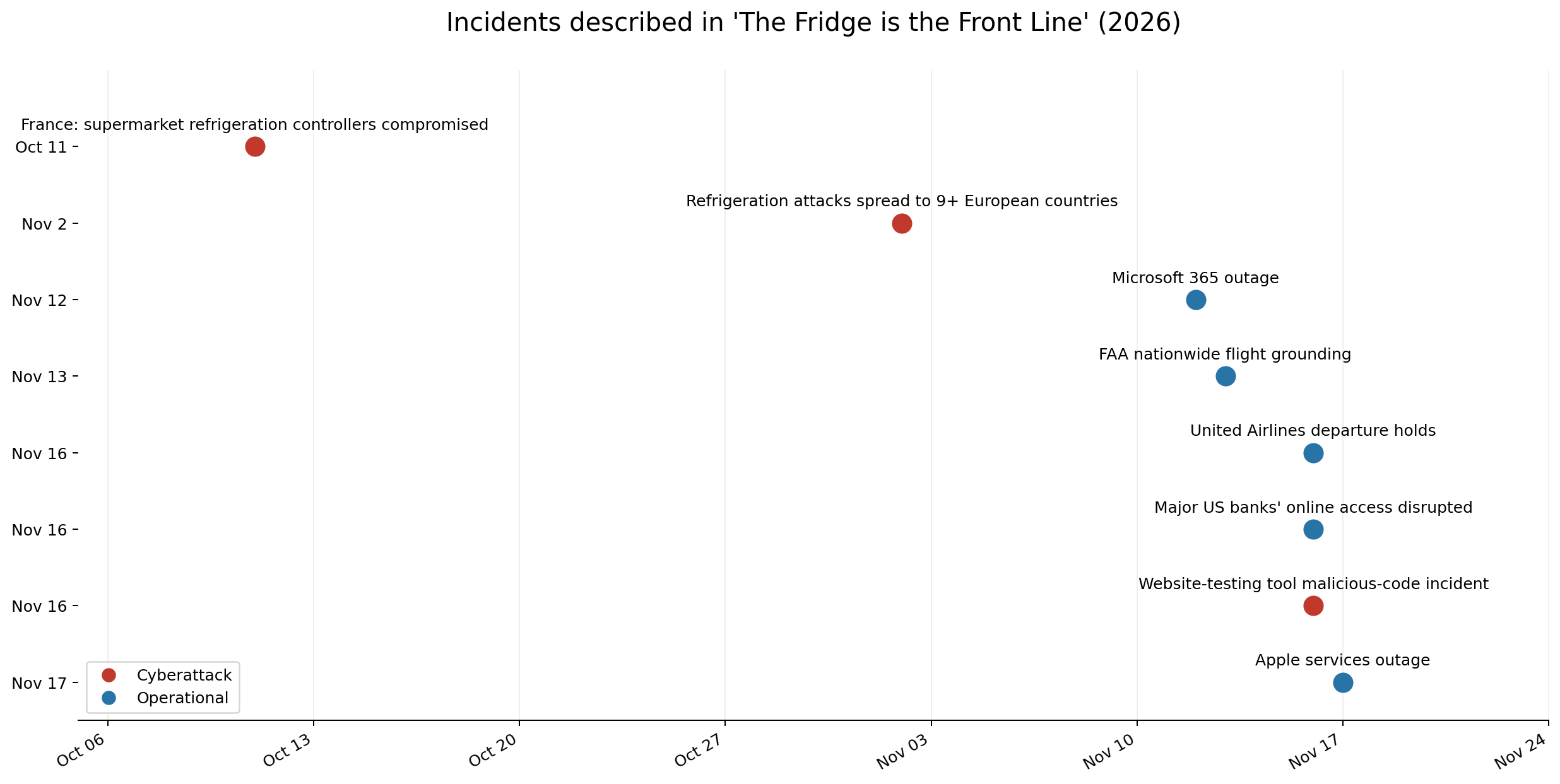
Incident | Detailed sources | What you'll find |
|---|---|---|
French refrigeration attack | Affected retailers, attack method, Danfoss vulnerabilities and financial losses | |
European refrigeration attack | Internet-exposed controllers, affected countries, attack timeline and defensive measures | |
Microsoft 365 | Gateway defect, outage duration, root-cause analysis | |
FAA nationwide ground stop | Router and telecommunications failure; investigation status | |
United Airlines | Flight disruption and broader infrastructure context | |
JPMorgan Chase | Payment disruptions and reported software issue | |
Wells Fargo / Bank of America | Reported banking access problems; no separate confirmed technical report identified | |
Optimizely supply-chain attack | Attack vector, affected organizations, malicious JavaScript and defensive guidance | |
Apple services outage | Affected services and reported software-update cause | |
South Korean bank breaches | AI-assisted attack allegations; underlying Washington Post report not independently located |
The incidents have one major thing in common:
They demonstrate how dependent modern society has become on interconnected digital systems — and how a single technical failure or security compromise can trigger widespread disruption.
Although not all incidents were cyberattacks, they reveal similar systemic weaknesses.
Seven common patterns
Common pattern | Examples | Underlying problem |
|---|---|---|
1. Single points of failure | FAA, United Airlines, banking outages | Critical services depend on individual systems without sufficient redundancy |
2. Legacy technology | Refrigeration controllers, FAA infrastructure | Older systems remain connected to modern networks without adequate resilience |
3. Large blast radius | Microsoft 365, Apple, Optimizely | A single failure or compromise affects many customers simultaneously |
4. Third-party dependencies | Optimizely, cloud services | Organizations inherit risks from suppliers and external platforms |
5. IT/OT convergence | Refrigeration controllers | Physical infrastructure is increasingly accessible through digital networks |
6. Insufficient isolation | Refrigeration systems, compromised website scripts | Failures or compromises can propagate beyond their original environment |
7. Business disruption | Supermarkets, airlines, banks | Technical incidents rapidly become operational and financial incidents |
These are recurring risk patterns, not necessarily confirmed root causes for every incident.
The underlying problem: Digital concentration risk
Different technologies, shared dependencies, widespread business consequences.
What does this mean for cybersecurity?
The incidents point to a shift from focusing exclusively on preventing cyberattacks toward engineering operational resilience.
Organizations should be asking:
- Which digital dependencies could stop our business?
- What happens when a critical supplier becomes unavailable?
- Can a compromised IT system affect physical operations?
- How quickly can we detect, isolate and recover from failures?
- Have we actually tested operating without critical digital services?
Lessons Learned
Cybersecurity is no longer just about protecting data. It is about keeping the business running when technology fails — whether through cyberattacks, human error, software defects or supplier outages.